
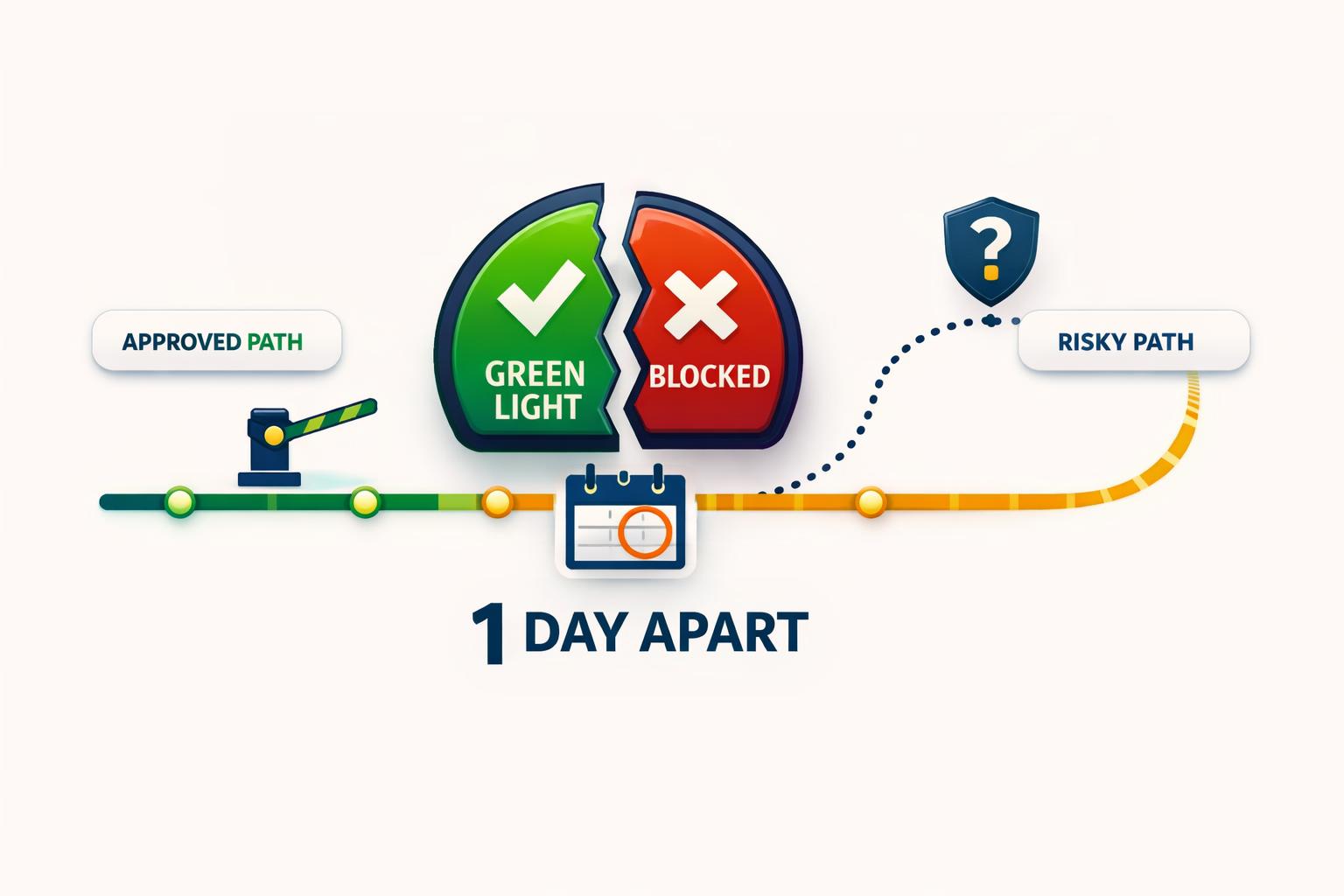
OpenAI and SpaceXAI released rival flagship models within a day of each other, VC money is flooding into AI at a rate no one can quite explain away as normal, and nobody — not even the White House — agrees on who actually controls when a frontier model reaches the public. Here's what today's news says about where the power in AI actually sits.
OpenAI's GPT-5.6 finally ships — but who approved it depends on who you ask
After weeks of delay, OpenAI confirmed its GPT-5.6 family — three tiers called Sol, Terra and Luna — would roll out globally on Thursday 9 July. Sol is the flagship, built for deep reasoning and agentic work; Terra targets everyday tasks; Luna is the cheap, fast option. OpenAI says the family represents a "meaningful step up in cybersecurity capabilities", which is precisely why it got held up.
The release had been paused at the Trump administration's request under a June 2 executive order establishing voluntary government review of frontier models before public launch. Axios reported the Commerce Department had given OpenAI a "green light" to proceed. The White House flatly denied that framing, telling Gizmodo: "The Trump administration did NOT give OpenAI a 'green light,' approval, or clearance to release its models" — insisting release timing rests entirely with companies.
The same day, OpenAI published its own National Security Principles, ruling out use of its technology for mass domestic surveillance, directing autonomous weapons, or high-stakes automated decisions, while confirming expanded cyber-defence partnerships with Australia, Canada, Japan, South Korea, France, Germany, Poland, the Netherlands and EU bodies like ENISA. It's a deliberate attempt to get ahead of the ambiguity that has dogged Anthropic, whose Fable 5 and Mythos 5 models were export-banned and then restored within the same fortnight.
OpenAI also used the day to release new voice models, GPT-Live-1 and GPT-Live-1 mini, which can speak and listen simultaneously and now power ChatGPT Voice by default.
SpaceXAI's Grok 4.5 skips the queue entirely
While OpenAI navigated its review process, SpaceXAI released Grok 4.5 — its first model built jointly with Cursor since SpaceX's $60 billion acquisition of the coding startup. Elon Musk called it "an Opus-class model, but faster, more token-efficient and lower cost," pricing it at $2 per million input tokens and $6 per million output tokens against Anthropic Opus 4.7's $5 and $25.
Notably, Grok 4.5 wasn't subject to the same government review that delayed both GPT-5.6 and Anthropic's models — despite Grok's history of generating non-consensual explicit imagery, including of children, a subject of an expanding class-action lawsuit detailed by Ars Technica. Which frontier models get scrutinised, and which don't, currently looks less like policy than luck.
Record capital, concentrated in fewer hands
The money behind all this is startling even by AI standards. PitchBook-NVCA data shows US venture funding hit $412.7 billion in the first half of 2026 — up nearly 30% on all of last year — with AI companies capturing $355.9 billion, or 86% of every dollar deployed. Rounds of $100 million or more now make up 87.5% of total value, up from 43.8% just two years ago.
The concentration is visible everywhere:
- Anthropic's $65 billion round pushed its valuation to $965 billion, up 157% in three months.
- SpaceX's $1.7 trillion IPO generated more value than every US venture-backed exit of the past decade combined.
- Amazon is preparing to raise at least $25 billion in bonds to fund AI infrastructure, part of a sector-wide spend Bloomberg pegs above $700 billion this year across Amazon, Alphabet, Microsoft and Meta.
- Apple pledged more than $30 billion to an extended Broadcom chip partnership focused on edge AI.
This is capital chasing capability at a pace that leaves little room to ask whether governance, safety testing or workforce transition planning are keeping up.
Beijing warns its own companies off Anthropic's coding tool
China's National Vulnerability Database issued a public warning about a "security backdoor" in Anthropic's Claude Code, alleging it could transmit users' location and identity data to Anthropic's servers without consent. Alibaba has banned employee use of the tool from 10 July. Anthropic engineer Thariq Shihipar responded that the flagged behaviour was an experiment from March "meant to prevent account abuse from unauthorized resellers and protect against distillation," and said it would be rolled back. The episode lands alongside a separate Reuters report that China plans to let its top AI firms buy a limited quantity of Nvidia H200 chips — a reminder that chip access and software trust remain entangled across the US-China AI relationship.
Meta lets users generate deepfakes from other people's photos
Meta's new Muse AI model can generate realistic images from public Instagram photos — including of celebrities and ordinary users — without their explicit consent, and NBC News reports Meta's own detection tools don't always catch the results. It's a striking contrast to Meta's separate announcement this week of a camera safeguard for its AI glasses, designed to disable recording if the indicator LED is tampered with — one hand tightening privacy while the other loosens it.
The layoffs are no longer hypothetical
Two datapoints today move AI-driven job losses from forecast to filed accounts. Chinese internet giants — Alibaba, Tencent, ByteDance, Meituan and Baidu — have cut roughly 130,000 jobs over 18 months, with Alibaba's headcount down 34% even as profits grow. Separately, Allianz's travel and assistance unit will cut up to 1,800 positions across Europe, citing AI-driven transformation, while Munich Re's ERGO unit is cutting around 1,000 roles for similar reasons.
The Hexalink view
Put these six stories side by side and a pattern emerges: capability and capital are moving in lockstep, while the mechanisms meant to govern both — export controls, safety review, content provenance, workforce transition — are improvised, contested, or simply skipped by whichever company moves fastest. The same week that produced a trillion-dollar valuation swing for Anthropic and a public spat over who authorised GPT-5.6's release also produced a deepfake tool with no meaningful consent mechanism and 130,000 real job losses attributed directly to AI adoption.
Our advisory position: don't wait for regulatory clarity that isn't coming soon. Treat vendor safety disclosures, national security principles documents, and export-control history as procurement inputs, not press-release colour — the gap between what the White House says and what Axios reports about the same event this week shows how unreliable public signals can be. And if your organisation is deploying agentic tools trained by labs currently entangled in geopolitical disputes, build a vendor-diversification plan now, before a ban forces one on you.
We'll be back tomorrow with the next briefing — or catch the five-minute version on the AI Storm Daily podcast if you'd rather listen on the way in.