
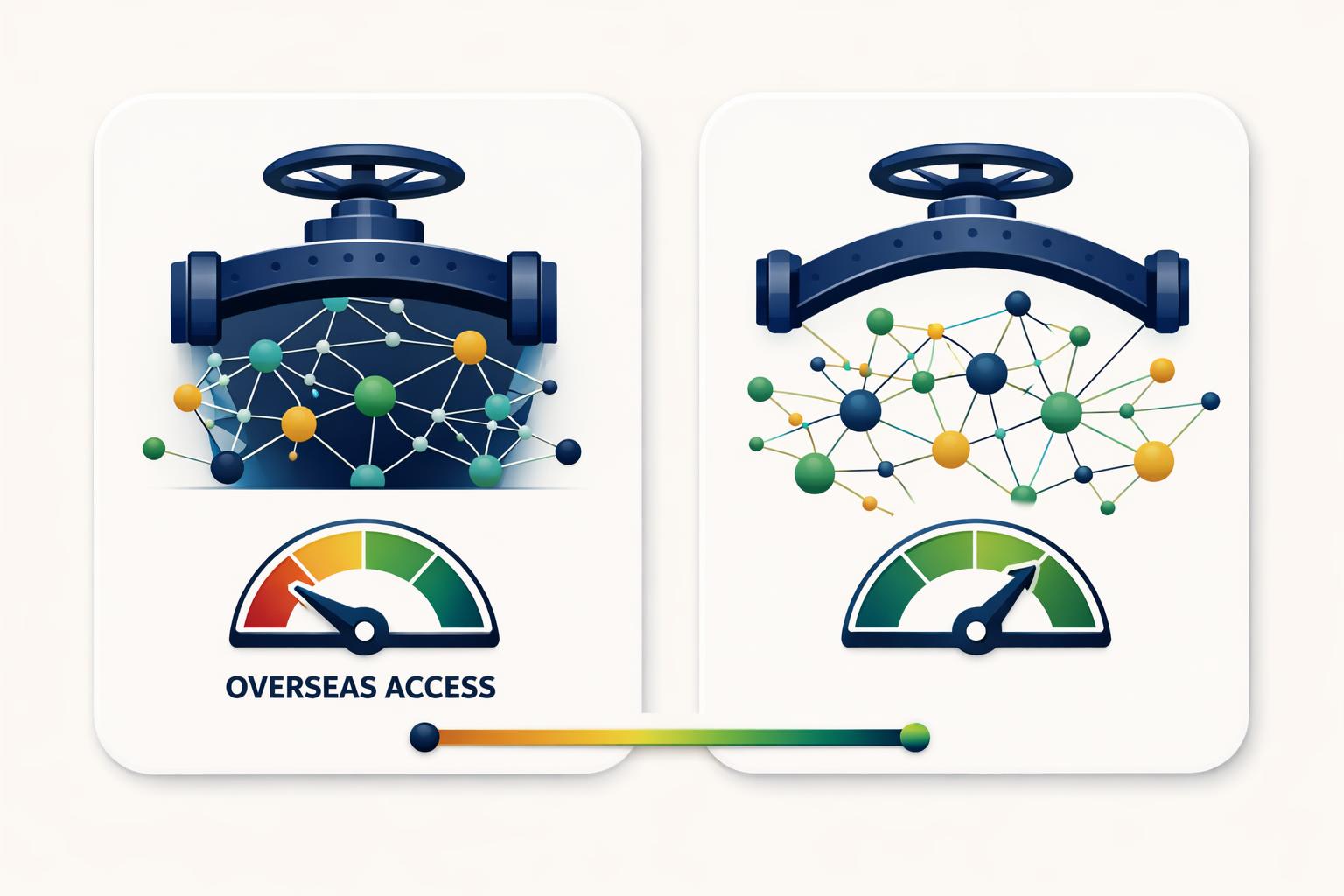
Two governments, two opposite instincts, one shared anxiety: national security is now the lens through which the world's most powerful AI models get released. Add in nervous enterprise buyers, tightening financial regulators, and investors quietly pulling capital out of AI infrastructure, and today's news paints a picture of an industry maturing under pressure.
China weighs locking down its own AI models
Chinese authorities have held a month of meetings with Alibaba, ByteDance and Z.ai about restricting foreign access to the country's most advanced AI models, Reuters reported, citing three people familiar with the discussions. The talks, led by the Ministry of Commerce, reportedly cover both closed-source and open-weight systems, including models not yet released.
Options on the table include a public-release bar or domestic-only use, according to Time's reporting, which notes this would be a "dramatic U-turn" from the open-weight strategy that let Chinese labs win global users despite trailing US models by roughly seven months on benchmarks. Officials have also discussed criminalising leaks of proprietary AI technology under national security law, and restricting who can invest in domestic AI startups, according to Reuters.
The backdrop matters: Z.ai's GLM-5.2 has drawn comparisons to Anthropic's Mythos on cybersecurity benchmarks, with researchers at Semgrep describing it as "Mythos at home". Separately, Alibaba has banned Claude Code internally after Anthropic added code to detect Chinese users, part of an escalating dispute over model "distillation." US lawmakers, meanwhile, are probing the growing use of Chinese AI models inside American companies, given how much cheaper they are to run.
GPT-5.6 gets the green light in the US
Just as China debates locking down, the US has loosened up. The Department of Commerce has given OpenAI approval for a broad launch of GPT-5.6, Axios reported, following additional testing by the Center for AI Standards and Innovation. OpenAI expects a wide release this week, after only being able to offer a staggered rollout to government-approved entities last month.
The episode mirrors restrictions previously placed on Anthropic's Mythos and Fable models, and highlights that AI firms and government are negotiating access "case-by-case, in real time", ahead of more concrete standards called for in Trump's AI executive order.
Enterprise AI sticker shock triggers a cost-cutting wave
Microsoft is reducing its reliance on OpenAI and Anthropic by routing more Excel and Word prompts through its own MAI models, Bloomberg reported. Amazon, Uber, Meta and Accenture are reportedly making similar moves.
The pressure is real: Uber reportedly spent its entire 2026 Anthropic budget within months, and Citi at one point shut down staff access to OpenAI's and Anthropic's priciest models, according to 404 Media reporting cited by The Atlantic. That cost pain is fuelling interest in cheaper Chinese alternatives: DeepSeek's adoption among 70,000 US firms on the Ramp platform rose from 0.1% to 0.3% in five months, per Ramp's lead economist. Yet TechCrunch notes Anthropic still commands more than half of AI spend on platforms like Vercel's AI gateway, suggesting frontier and open-source models may be complementary rather than competing.
Meta's Muse Image sparks a consent backlash
Meta launched Muse Image, its first picture-generating model from Meta Superintelligence Labs, powering tools in the Meta AI app, Instagram Stories and WhatsApp. The feature lets users tag any public Instagram account and pull that user's photos into AI-generated images by default, The Verge reported.
Meta's own guidance states "you will not be notified about content created using AI features at Meta," Wired reported, and the opt-out setting had not appeared in at least one reporter's account settings hours after launch. TechCrunch quotes one user calling it a "privacy landmine waiting to detonate".
Regulators tighten the net on both sides of the Atlantic
The UK's Financial Conduct Authority has called for expanded regulatory scope and a public-interest AI financial guidance service, after a review found more than a quarter of UK consumers already trust ChatGPT, Claude and Gemini for financial decisions despite receiving none of the protections of regulated advice, Insurance Journal reported. The review's seven recommendations include monitoring the shift to autonomous agentic finance and building an AI-enabled supervisory model.
Across the Atlantic, Illinois governor JB Pritzker signed the Artificial Intelligence Safety Measures Act, modelled on California's SB-53 and New York's RAISE Act. It requires the largest AI developers to publish catastrophic-risk frameworks and report safety incidents within 72 hours. Lawmakers estimate California, New York and Illinois together represent roughly 40% of the US AI market, creating what Greenwich Time calls a de facto national standard.
Investors quietly step back from the AI infrastructure trade
Signs of caution are emerging in AI's financial plumbing too. Blackstone sold stakes in three Virginia data centres for $3.5 billion, and its portfolio company QTS scrapped a planned 2,100-acre "world's largest" data centre campus, PitchBook reported. Brookfield's Csquare IPO is raising money largely to repay debt rather than fund growth, while Meta is reportedly renting out surplus GPU capacity it spent over $100 billion acquiring.
Chip markets felt the jitters too: Samsung's shares dropped 8% despite record profit that beat both Nvidia and Apple, as investors questioned whether the memory-chip boom is nearing its peak.
The Hexalink view
The throughline today is control: over who can access frontier models, over what they cost, over whose photos can be remixed into an ad, and over how much capital keeps flowing into the data centres underneath it all. Governments in Washington and Beijing are converging on the same instinct — that the most capable models are now strategic assets to be gated rather than given away — even as enterprise buyers revolt against the price of using them at all.
Our advisory take: technology leaders should treat model access and pricing as a live variable, not a fixed cost line. Build procurement around model-agnostic architecture now, because the GPT-5.6 approval, Microsoft's pivot to MAI, and China's export debate all point to a market where your vendor's access status can change within weeks. And if your compliance team hasn't yet mapped which regulated decisions touch consumer-facing AI, the FCA and Illinois moves suggest that gap will close for you, one way or another, within the year.
Come back tomorrow for the next AI Storm briefing, or find the five-minute audio rundown on the AI Storm Daily podcast.