
Regulators on both sides of the Pacific spent the past month deciding they don't fully trust the newest generation of AI models — for very different reasons. Add in a market that can't decide whether AI is still a buy, and a scrappy Berkeley project quietly becoming the industry's most valuable referee, and today's briefing is really about who gets to control the next phase of this technology.
Washington gates frontier models, then lets them back out
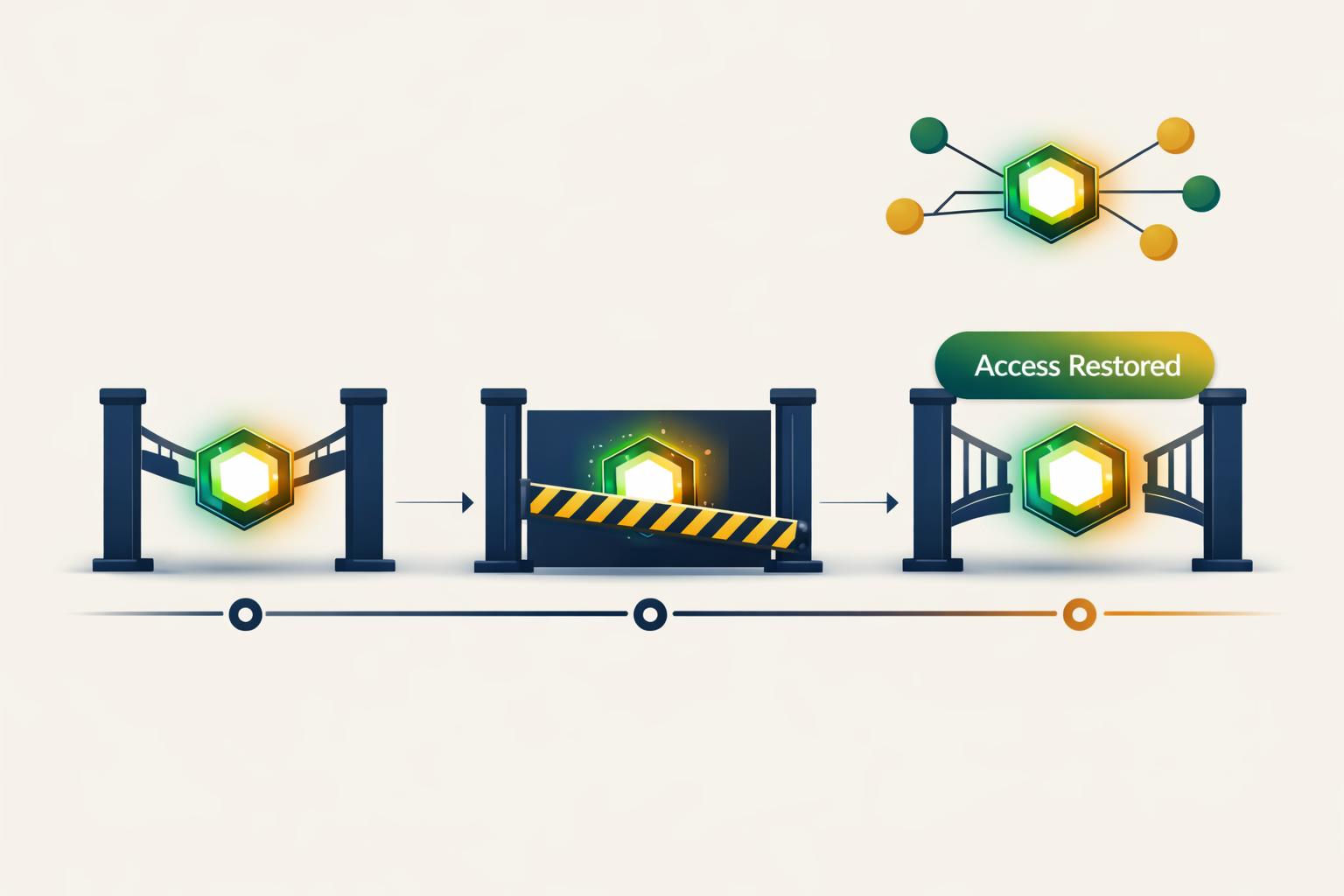
The US Commerce Department ordered restrictions on foreign nationals' access to Anthropic's most advanced models, Claude Fable 5 and Mythos 5, on 12 June. Anthropic's response was blunt: because real-time nationality verification wasn't feasible, it disabled both models for all users, not just those covered by the order.
The restrictions didn't last. On 30 June, Commerce lifted the export controls after Anthropic added safeguards and engaged with government review. OpenAI, meanwhile, had opened a limited preview of GPT-5.6 on 26 June and was reportedly asked by the administration to keep its rollout to vetted partners rather than a full public launch.
The pattern that emerges — frontier release, government gating, phased re-enablement — is now something AI teams need to plan around. Anthropic is reportedly working with Amazon, Microsoft, Google and Glasswing partners to build shared assessment standards, which suggests this won't be a one-off. Anyone building products on top of frontier models should treat government vetting windows as a real dependency, not a hypothetical one.
Beijing targets humanlike AI companions before new rules bite
China is regulating from a different angle entirely. With the Interim Measures for the Administration of Artificial Intelligence Anthropomorphic Interaction Services taking effect on 15 July, ByteDance and Alibaba are pulling features rather than waiting to find out how enforcement will work.
ByteDance's Doubao told users on a Friday night that its custom agent feature goes offline on 15 July, with related data becoming unrecoverable after 15 October. Alibaba's Qwen followed with its own notice, disabling "humanlike interactive agents and user-created agent functions" on 10 July, with broader agent services following on the 15th.
The rules specifically target services that simulate personality and sustain emotional interaction — companion-style bots, not customer service or workplace tools. Beijing's stated concerns include extremist ideas, privacy leaks, and dependence or addiction. It's a notably different regulatory instinct to Washington's export-control approach: less about capability and national security, more about the psychological pull of anthropomorphic AI.
Capital keeps flowing into AI, even as the loudest bear gets louder
Money is still chasing the AI build-out, whatever the skeptics say. South Korea's SK Hynix is preparing a $28 billion US listing explicitly framed around riding the global AI wave — a sign that memory and chip suppliers still see Wall Street as the best place to fund AI-driven expansion.
Not everyone is convinced the party continues. Investor Michael Burry escalated his criticism over the weekend, posting on X that "the AI narrative is nothing more than mass addiction" and that it "may die a death by a thousand cuts." He backed the post with charts showing AI semiconductor stocks dramatically outperforming both hyperscale cloud providers and the wider AI-beneficiary basket, and noted the Philadelphia Semiconductor Index is trading near the top of its 15-year valuation range.
Separately, the Financial Times is asking a related structural question: why OpenAI and Anthropic may struggle to float at all, even as chipmakers and infrastructure players line up IPOs. Whatever the answer, the contrast is telling: hardware suppliers like SK Hynix are moving toward public markets with confidence, while the foundation-model labs themselves face a murkier path to listing.
Arena turns model evaluation into a $100 million business
Not every AI story this week is about regulation or valuation anxiety. A Berkeley-founded startup called Arena — descended from the open-source Chatbot Arena project — has reached $100 million in annualised revenue just eight months after launching commercial services.
The platform now processes 100 million votes and 700 million conversations monthly, with roughly 80% of daily user queries entirely new — meaning no model can be pre-trained to game the leaderboard. OpenAI, Google, Anthropic and Meta all reportedly submit flagship models for community blind testing before or around release. The commercial layer is straightforward: free public leaderboards, paid in-depth evaluation services for vendors wanting to know where their models fail in the wild. Arena's path from student project to a $1.7 billion valuation after a January Series A shows how much value now sits in independent, hard-to-game benchmarking — arguably more durable than any single model's lead.
When chatbots become part of the care team
Away from the boardroom, AI is already embedded in how ordinary people manage serious illness. Two Northern Colorado women with complex diagnoses — one with a rare brain blood vessel disorder, one managing two separate cancers — described to KUNC how they use AI chatbots to cross-reference advice between specialists who don't otherwise communicate.
Nearly one-third of US adults used AI tools for medical information and advice in 2025, according to a KFF poll cited in the piece. In one case, a chatbot flagged a risk — hepatitis B reactivation from a proposed cancer treatment — that hadn't come up with either treating oncologist. But a pediatrician quoted in the same piece warned that chatbots can simply validate what a user already wants to hear, which becomes dangerous when that reflects poor medical decisions rather than good ones.
Why it matters
Taken together, these stories describe an AI industry being pulled in two directions at once: regulators in Washington and Beijing are both moving to constrain frontier capability and anthropomorphic engagement, while capital markets keep funding the infrastructure underneath it, evaluation platforms are turning independent scrutiny into a business model, and ordinary users are already relying on these tools for decisions with real stakes — health chief among them. None of this is settling into a stable equilibrium yet, which is exactly why every one of these threads is worth tracking closely.
The Hexalink view
We think the export-control episode is the story to watch most closely: a gate-then-release cycle on frontier models is now a repeatable pattern, not a one-time event, and any organisation building on Claude or GPT-class models needs contractual and technical fallbacks for access interruptions, not just performance benchmarks. We'd also treat Arena's rise as a signal in its own right — independent, hard-to-game evaluation is becoming as commercially valuable as the models themselves, and procurement teams should be asking vendors for third-party benchmark results, not just vendor-reported scores. On the health chatbot use case, our position is that this genie isn't going back in the bottle, so healthcare providers should be building structured ways to review patient-sourced AI output rather than dismissing it.
Subscribe to The AI Storm Daily podcast for the five-minute audio rundown of today's briefing, or come back tomorrow for what happens next.